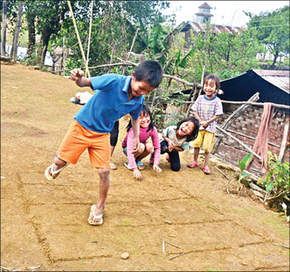
Play is it Serious Learning or a Break from Learning?

Play may be as old as the existence of humankind. Playthings have been discovered in the artifacts of ancient civilizations and many believe that the earliest chess pieces date back to 6,000 B.C. Though the link between play and learning was more fully investigated in the 20th century by theorists such as Jean Piaget, the connection was made as early as the first century B.C. by Plato, “You can discover more about a person in an hour of play than in a year of conversation”.  Play is essential, vital, critical, and fundamental to a child’s social, emotional, physical, and intellectual development. Without adequate, healthy play, children run the risk of entering school unprepared, growing into teens and adults without needed skills, and failing to meet their potential.  Experts have come to recognize healthy structured or casual encounters can result in well developed socially aware children. They further contend that it leads to an aptitude for learning, and can curtail violent behaviors.

What is play?

Play is an activity that involves fun,recreation or amusement. there are many types of play including social, solitary, active, dramatic etc. as children we learn how to solve problems, find alternatives, create visions and list is endless.

Hence the question…is play a break from serious learning or is it serious learning?
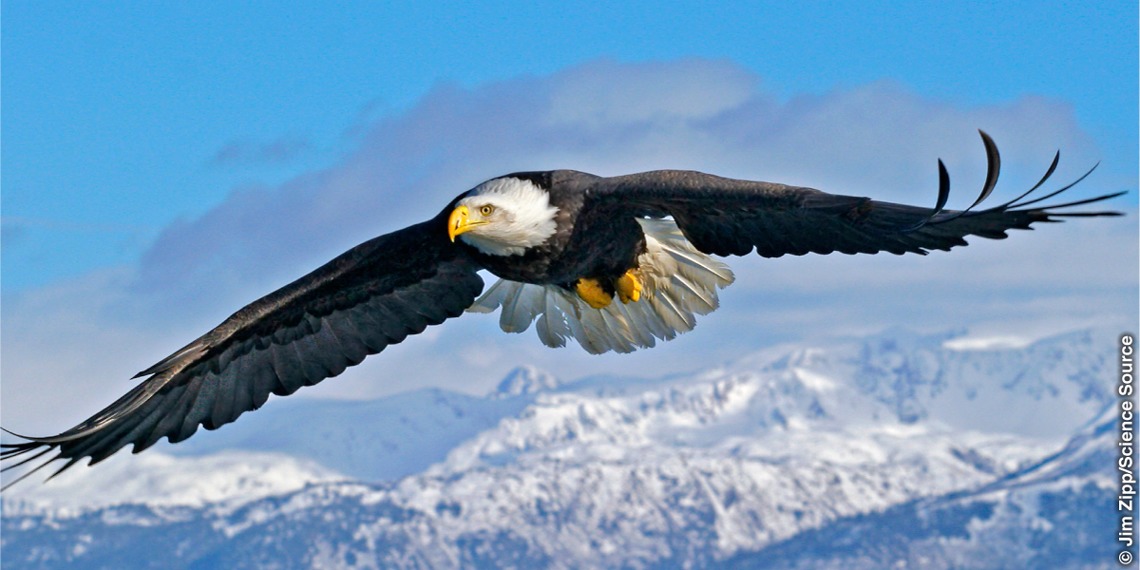
Nature influences Technology

A JET plane in flight creates rapidly spiraling swirls of air at the tips of its wings. These vortices cause drag, increasing fuel consumption. They also buffet planes that may be following closely. Thus, flights departing from the same runway must be sufficiently spaced to allow time for the vortices to dissipate.Airplane engineers have discovered a way to reduce these problems. Their solution? Winglets, inspired by the upturned wing-tip feathers of soaring birds, such as buzzards, eagles, and storks.

During flight, the feathers on the wing tips of those large birds bend upward until they are almost vertical. This configuration balances maximum lift with minimum wing length. It also improves performance. Engineers have designed airplane wings with a similar shape. Using innovative wind-tunnel testing, they found that if the modified wings were precisely curved at the tip and properly aligned with the airflow, they improved aircraft performance—nowadays by up to 10 percent or more. The reason? Winglets minimize drag by reducing the size of the vortices. Moreover, winglets also create a form of thrust that “counteracts some of the normal drag of the airplane,” says the Encyclopedia of Flight. Winglets thus enable airplanes to fly farther, carry a greater load, have shorter wings—which also facilitates parking—and save fuel. In 2010, for example, airlines “saved 2 billion gallons [7,600 million L] of jet fuel worldwide” and contributed to large reductions in aircraft emissions, says a NASA news release. (Awake! February 2015 Watchtower and Tract Society)

Were the birds a result of careful design?

Electrical Cars… viable?

The transition to an all-electric future will require sizable investments in the acceleration of vehicle charging infrastructure and potential legislation for the installation of charge points in new homes. But this transition to electric vehicles (E Vs) is gaining momentum. Whilst electric cars and lorries may account for a tiny percentage of vehicles on the road today (4 million electric vehicles versus over one billion petrol and diesel cars), adoption is accelerating, fast.  It took over 20 years to sell the first million electric cars. Now, a million electric vehicles are sold in just four to five months.

It is exciting to know that Jamaica is not left out of this innovation, with Texaco slated to install charging points at selected locations across the island (Jamaica Observer 24/2/19). Despite the great benefits to be gained, environmentally, there are foreseeable challenges. Climate change is a significant game changer in this scenario. Then we have the oil tycoons whose profit margin will be significantly impacted. Locally our auto-mechanics are not trained nor sometimes equipped to take on the challenges that come with gas/diesel vehicles: imagine what will happen when the see a car with no engine presenting technical difficulties.

First Blog Post

The course Technology in Education is one that intrigues me somewhat. As a teacher/librarian it is quite an essential course. So far I’ve learnt how to create my own website. Its a great way to have interest students in journal writing. Reinforcing the theories and using the strategies in revision was a nice spin to the PowerPoint presentation.

click on the link